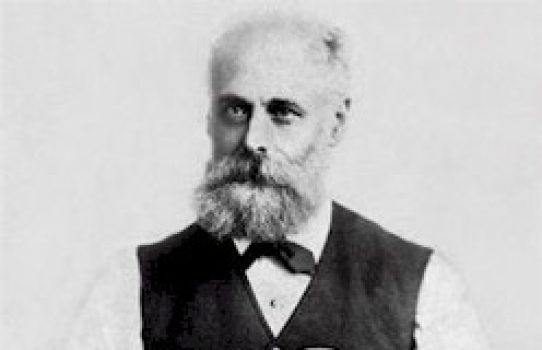
WILLIAM THOMAS REED ATKINSON 1851 to 1929
Violin Maker, Post master, General Hardware store owner – and Paglesham Church End resident.

William Thomas Reed Atkinson was a distinguished English violin maker whose career spanned from 1869 to his death in 1929. Born in Stepney, London, Atkinson received a grammar school education and began experimenting with acoustics and varnishes at an early age.
When he was about 11 years old, the family moved to Liverpool and Atkinson was put to work behind the bar of his uncle’s public house near Birkenhead. Although this was much against the boy’s inclination, he stayed here until he joined the Merchant Navy as a teenager.
He was a second steward on board several steamships. It is said that on one occasion Atkinson’s ship took in tow the encased and floating Cleopatra’s Needle, now standing on the Thames embankment at Westminster, which had broken away in a storm from a ship chartered to bring it to London.
Atkinson’s parents then moved back to London and Atkinson left the Merchant Navy to become apprenticed to a joiner. His first instrument, dating to 1869, was made at this time.
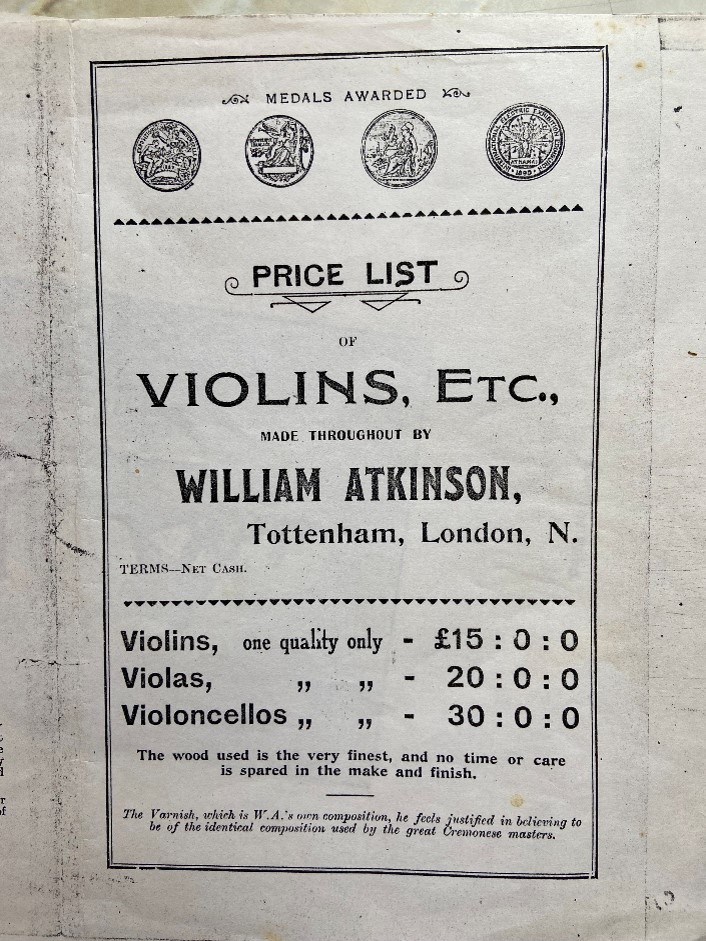
He married in 1880 to Miss Mary Elizabeth Camper,and shortly afterwards moved to Tottenham, where he later opened a shop, selling hardware, oils, paints and varnishes. He also displayed his violins, violas, and cellos which he made in a workshop to the rear of the property.
Whilst helping his brother in law build the new stand at Tottenham Hotspurs Football ground, he suffered a bad accident that led to the amputation of his leg. However, he continued his work with the help of a wooden prosthesis.
The marriage was a happy one and produced three sons, with one son William Thomas Camper Atkinson eventually taking over the shop from his father in 1940.
Atkinson’s work is considered among the most refined of the early 20th century, characterized by meticulous craftsmanship and a dedication to quality. He made every part of his instruments himself, and was known for his unique oil-based varnish.
He applied up to 24 coats of varnish, which required years to dry. This oil-based varnish took a long time to dry. Atkinson said he could ‘make a violin in a fortnight, but he would need two years in which to dry it’

He made approximately 300 instruments, but he destroyed many that did not meet his exacting standards.

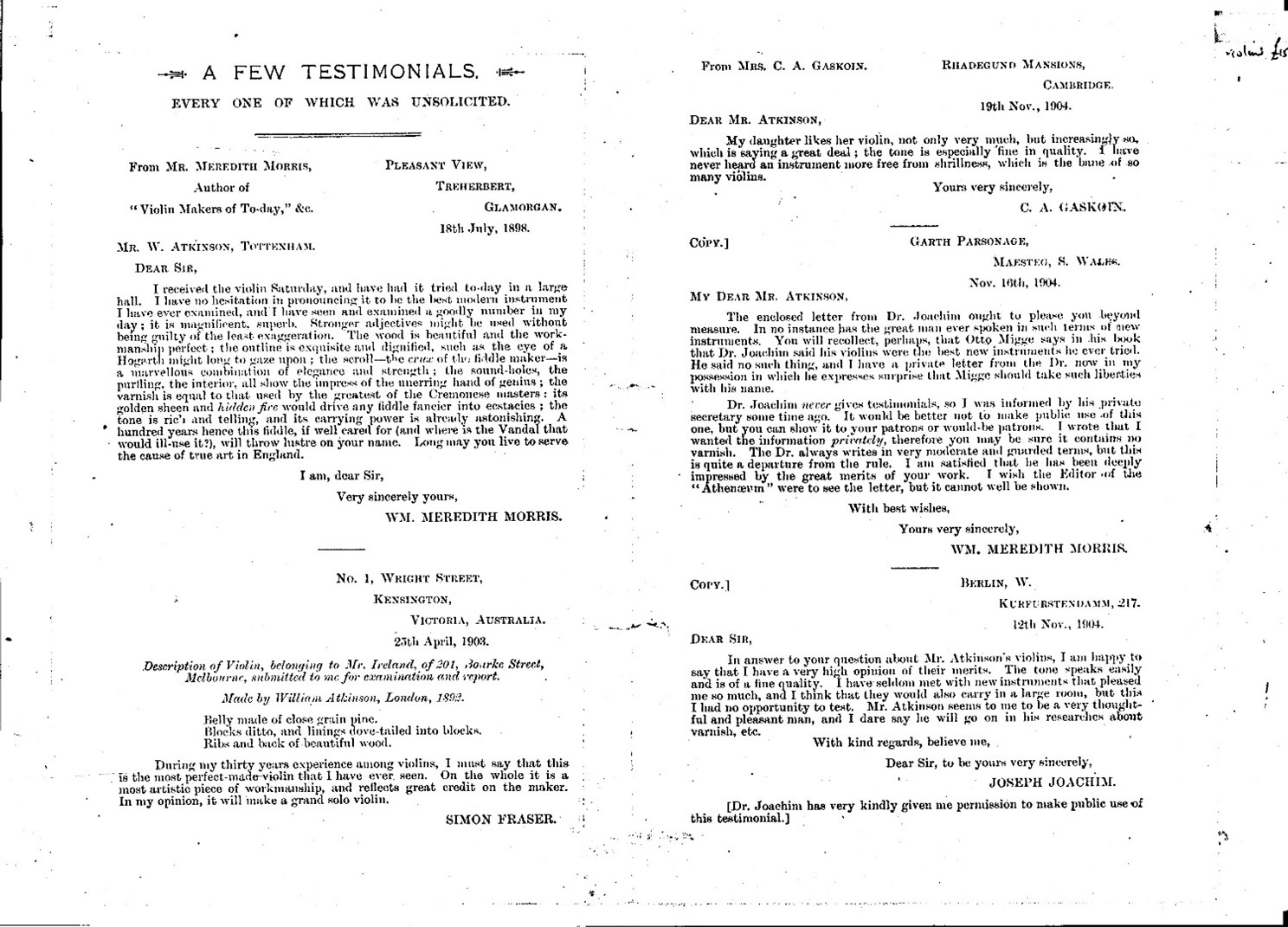
His instruments were highly regarded for their refined design, exceptional tone, and artistic execution. He won a bronze medal in Paris in 1889 and a silver medal in Edinburgh in 1890 showcasing his violins and violas.
In 1911, apparently due to the pollution of London affecting his drying and varnishing of the instruments, he moved to Paglesham, where he continued his craft while running the post office and general store with the help of his wife.
This had a great advantage in that he never felt economically pressured. He was able to take time to make instruments completely to his satisfaction and was ruthless in rejecting anything, which did not come up to scratch.
Atkinson clearly continued to experiment with varnish for many years, but essentially the oil varnish was put on by between eighteen and twenty-four coats, each having to dry before the next coat was put on. In the summer the instruments were dried by simply stringing the violins up between two poles in the garden of the Post Office in Paglesham.
He was not only deeply committed to his craft, but to his community too, serving as a churchwarden at St Peters Church in Paglesham, and this became an important part of his life for many years.
He is quoted as saying ‘If I were asked what was my greatest gift, I should say it was to make a violin, but I would not spend five minutes on it if I had not got the varnish I use. That varnish is my own, and I would stake my life it is the same varnish the old masters used.’
Unfortunately, William Atkinson Senior died with his unique varnish ingredients intact.
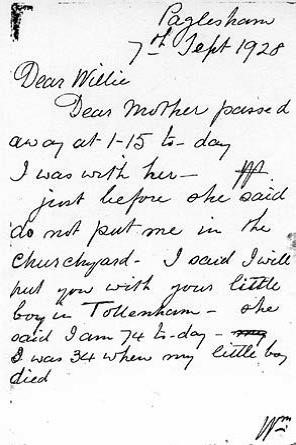
He wrote to his son William Thomas Camper Atkinson just after his wife’s death in 1928 that she had asked to be buried with their infant son in the cemetery in Tottenham, and this is also where William chose to be buried after his death in 1929.