
dedicated to our ancient, historical and beautiful village
Explore the past with stories and historic events that have shaped Paglesham over the centuries
Snippets:
William Blyth a famous Smuggler lived, died and is buried in the churchyard
Dame Ellen MacArthur learnt to sail on her Aunt’s boat here
Former Prime Minister Edward Heath once sailed to Paglesham.
Professor Ian Mc Donald who invented ultrasound is buried in the churchyard
There was a prominent jazz club in the basement of one of the houses, where Digby Fairweather and Kenny Baxter regularly played
Sir Henry Simmerson (fictional character in Sharpe) was the MP for Paglesham
This Text Box widget is placed within a Flexbox Container. If you feel you want to learn more about how containers can help you with your website, watch this video.
Lorem ipsum dolor sit amet, te has solet. Voluptua quaestio dissentias has exLorem ipsum dolor sit amet, te has solet postr. Lorem ipsum dolor sitoa amet, te has solet is Voluptua quaestio and.
exLorem ipsum dolor sit amet, te has solet postr. Lorem ipsum dolor sitoa amet, te has solet is Voluptua quaestio and. exLorem ipsum dolor sit amet, te has solet postr.
It is thought that Paglesham may have its name from the Pake family who are listed as farm owners in 1622.
Farms were often named after ancient owners and when Nathaniel Monke died in 1622, his will was witnessed by Robert Pake, of Pake Farm. It is listed on many ancient maps as Paglesham.
At some point the title became Pagle which is a reference to the primula veris flower, or cowslip as it is commonly known.

In the Neolithic period Paglesham was a marshland with numerous small creeks and tidal channels and much of it would have been submerged with each high tide providing easily tilled soils and rich grazing on the marshes.
A jadeite axe found to the south-west of South Hall in 1964 provides evidence from this era whilst further evidence of a Roman settlement is provided by salt production sites located to the north-east.
In 1974 during excavations an Anglo-Saxon brooch was found, and it is considered to be such a detailed and finely made brooch that it would have been worn by a high ranking lady, possibly even the Queen relating to the Saxon King in the 6th century, whose tomb was found and excavated at Prittlewell, a few miles from Paglesham.
However, the mystery may always remain as to how a piece so expensive for its time would have become lost and not purposely buried as a hoard.
The Domesday book records Paglesham at the end of the Saxon period when there were 20 households and six landowners.
Church Hall Manor, adjacent to the Church belonged to Ingulf, who granted the manor to Westminster Abbey in 1066, just 3 weeks before he went to the Battle of Hastings with King Harold.
Although its existence was noted in church records there is no physical structure to see, and the present Church structure is Norman. However, there were formerly also manors at East Hall, South Hall and West Hall.
By the end of the medieval period the principal hall was at Church End, together with East Hall Manor in East End which was set in a moated enclosure, and South Hall in East End. Both Church Hall and East Hall Manors are no longer in existence.
Life during this time was based on fishing and possibly sheep rearing for cheese production.

The close-knit village then grew slowly and didn’t prosper until the 18th century when it became a hub of smuggling activity. This was a successful time financially with most of the smuggling commandeered by the parish councillor and police constable William Blyth also known as Hard Apple. There is even a rumour that he was a local magistrate!
He would lead fishermen back and forth to Dunkirk collecting tea, gin, tobacco and anything that would make money – tea was especially profitable.
Paglesham was perfect for smuggling, with so many creeks and rivulets, which became bogs and mud flats when the tide was out.
The smuggling was so successful, the Coastguard was eventually stationed at Paglesham, and the very famous ship HMS Beagle which carried Charles Darwin on his epic voyage of discovery was decommissioned here, and refitted as a static coastguard watch vessel to guard against smugglers.
However, we will delve into deeper waters when we discuss Paglesham smuggling and HMS Beagle in detail, in later months on this site.
In the 19th century Paglesham had a flourishing oyster industry. The oyster grounds were principally owned by the Wiseman and Browning families who lived at East End. James Wiseman inherited The Chase in 1851, then called Maritime Cottage, and enlarged it to the grand property seen today. The present appearance of East End owes much to James Wiseman, who commissioned construction of new roads, drains and cottages to provide housing for 20 families. In the late 1800’s the school was attended by over 30 pupils. Another oyster merchant, Zachary Pettitt, lived at Cupola house. It was Zachary who provided the Mission Room at East End in 1893, and it was here that the Paglesham Village Produce Association was formed, with the 1st show in 1946 shortly after the end of the 2nd World War to encourage villagers to grow their own produce. The summer show of the PVPA still runs to this day. As the oyster fishing increased so too did the population with 518 people living here in 1881,many were employed as oyster dredgers and fishermen in East End and farm labourers in Church End. However a wide range of trades were represented including cobblers, blacksmiths, bakers, thatchers, carpenters, boat builders, ships carpenters and the larger houses employed domestic staff. As the oyster industry declined so did the population and it has remained around 200 for decades, with farming and pleasure boat building creating some employment.
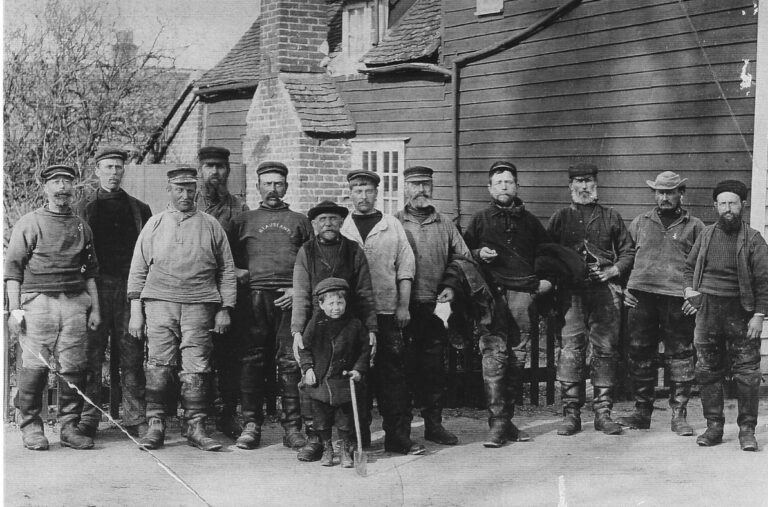
In the 19th century Paglesham had a flourishing oyster industry. The oyster grounds were principally owned by the Wiseman and Browning families who lived at East End. James Wiseman inherited The Chase in 1851, then called Maritime Cottage, and enlarged it to the grand property seen today. The present appearance of East End owes much to James Wiseman, who commissioned construction of new roads, drains and cottages to provide housing for 20 families. In the late 1800’s the school was attended by over 30 pupils. Another oyster merchant, Zachary Pettitt, lived at Cupola house. It was Zachary who provided the Mission Room at East End in 1893, and it was here that the Paglesham Village Produce Association was formed, with the 1st show in 1946 shortly after the end of the 2nd World War to encourage villagers to grow their own produce. The summer show of the PVPA still runs to this day. As the oyster fishing increased so too did the population with 518 people living here in 1881,many were employed as oyster dredgers and fishermen in East End and farm labourers in Church End. However a wide range of trades were represented including cobblers, blacksmiths, bakers, thatchers, carpenters, boat builders, ships carpenters and the larger houses employed domestic staff. As the oyster industry declined so did the population and it has remained around 200 for decades, with farming and pleasure boat building creating some employment.
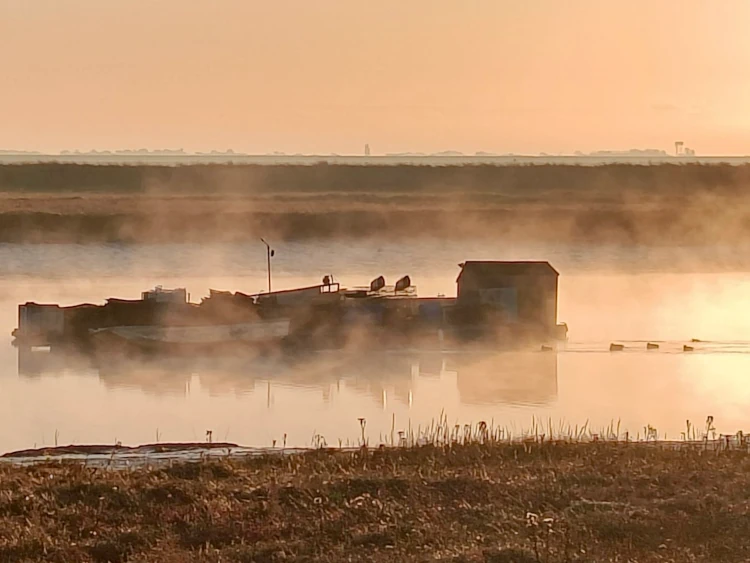
Although the financial economy of the village has changed dramatically over the last century, it remains an unspoilt area of natural beauty with a wild sea wall, long uninterrupted walks, two very successful and popular pubs, the Church, and a calendar full of days to celebrate both the Past and Present.
Although the financial economy of the village has changed dramatically over the last century, it remains an unspoilt area of natural beauty with a wild sea wall, long uninterrupted walks, two very successful and popular pubs, the Church, and a calendar full of days to celebrate both the Past and Present.
We will continue to add additional topics about the History of Paglesham on a regular basis – keep up to date on our
page.
We will continue to add additional topics about the History of Paglesham on a regular basis – keep up to date on our
page.
We will continue to add additional topics about the History of Paglesham on a regular basis
We will continue to add additional topics about the History of Paglesham on a regular basis – keep up to date on our
page.